Water-Wise Indigenous Gardening for South African Homes
Load shedding, water restrictions, and scorching summers — South African gardeners need plants that cope. An indigenous, water-wise garden stays attractive through dry months without breaking municipal rules or your budget.
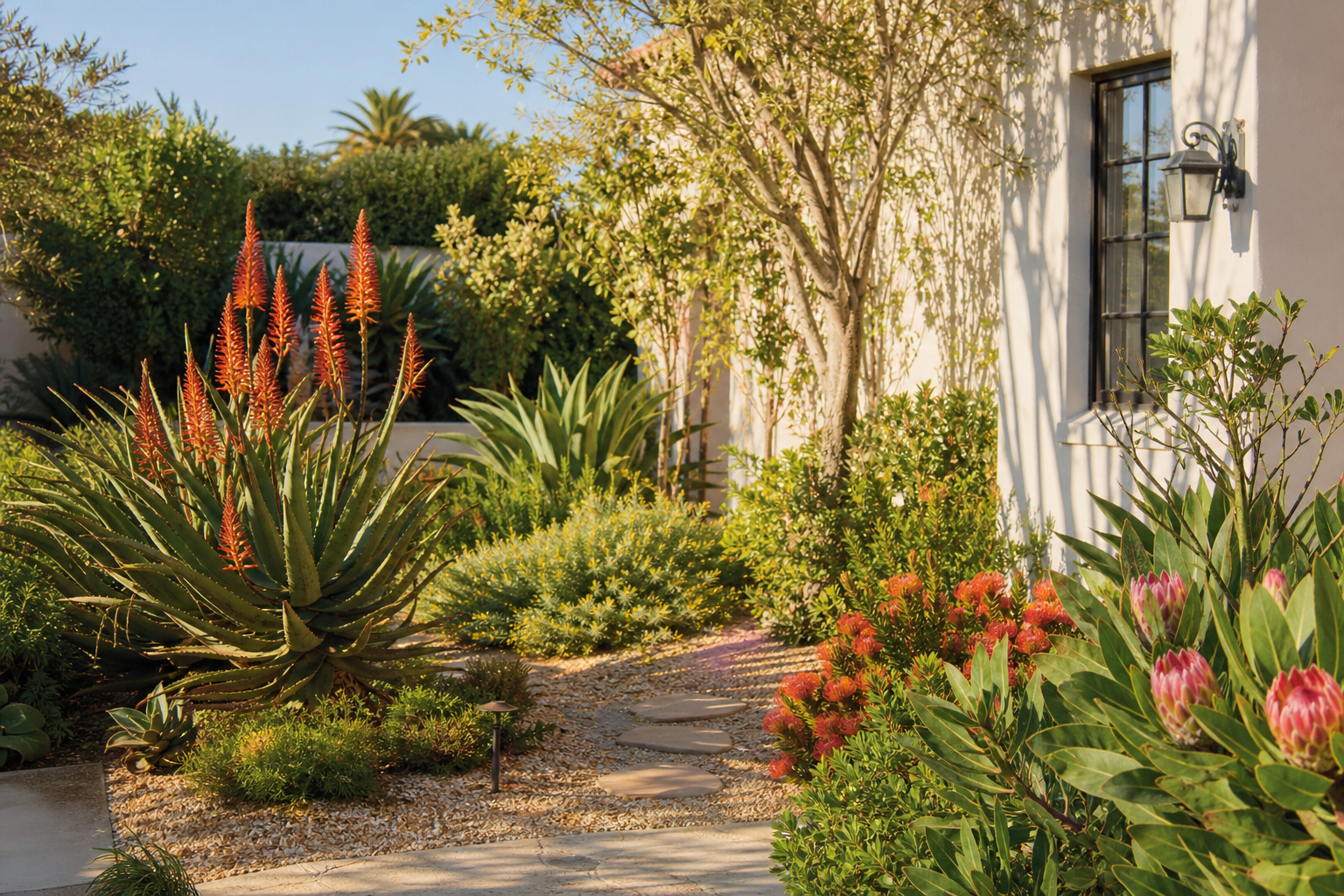
Gardening in SA Means Gardening With Constraints
If you live in Johannesburg, Cape Town, Durban, or Pretoria, you already know the pattern: summer heat, uneven rainfall, periodic water restrictions, and irrigation systems that fail exactly when you need them because the power is out.
Indigenous water-wise gardening is not a trend here — it is practical survival for anyone who wants a garden that still looks good when the hose is banned and the borehole is dry.
Two Climates, Two Playbooks
South Africa is not one garden zone. Broad strokes:
Western Cape (Mediterranean climate)
- Wet winters, dry summers — Plant in autumn so roots establish in rain
- Fynbos species want sharp drainage — avoid heavy clay without raising beds
- Summer watering should be minimal once plants settle; overwatering kills proteas and leucadendrons
Highveld & summer-rainfall interior (Gauteng, parts of KZN inland)
- Summer storms, dry winters — Mulch before winter to hold moisture
- Frost in cold suburbs — protect young succulents and subtropicals
- Lawns drink heavily; shrinking lawn area is the fastest water saving
Coastal Durban behaves differently again — humid, mild, with different pest pressure. Local nursery advice beats generic "South African" lists every time.
Indigenous Plants That Earn Their Place
Match species to your rainfall region — these are starting points, not universal prescriptions:
Western & winter-rainfall areas
- Aloe species — Structural, hummingbird-attracting, low water once rooted
- Protea and Leucadendron — Spectacular; need full sun and excellent drainage
- Agathosma (buchu) — Fragrant, compact shrub for sunny borders
- Carpobrotus (sour fig) — Ground cover on sandy slopes; edible fruit
Summer-rainfall interior
- Plumbago auriculata — Blue flowers, handles heat; can sprawl — prune to shape
- Tecoma capensis (Cape honeysuckle) — Tough hedge or climber; birds love it
- Hypoestes aristata (ribbon bush) — Purple spikes in autumn; shade tolerant
- Bulbine frutescens — Succulent ground cover; yellow or orange cultivars
Always confirm a plant is legal and appropriate — avoid wild harvesting from veld or protected areas.
Mulch, Gravel, and Soil Preparation
Water-wise design starts below ground:
- Organic mulch — 5–8 cm of bark chips or compost reduces evaporation and suppresses weeds
- Gravel top dressing on succulent beds — Reflects heat, keeps crowns dry
- Raised beds — Essential on clay where fynbos roots would rot in summer irrigation
- Compost in planting holes — Not fertilizer overload; indigenous plants often prefer lean soil once established
In Cape Town, align major planting with autumn rains (April–May). In Gauteng, September–October planting catches spring growth before harsh midsummer.
Irrigation That Respects Restrictions
Check your municipality's current water restriction level before installing anything permanent.
- Drip irrigation on a timer uses less than sprinklers — when power allows
- Rainwater tanks — Even a 2,000-litre tank helps through restriction weeks
- Greywater — Some households pipe shower water to garden beds; know local bylaws and avoid salty or oily runoff on edibles
- Hand watering at root zone — Often permitted when sprinklers are banned; confirm locally
Group thirsty plants together near the tap. Do not scatter them through a dry indigenous bed.
Lawn Alternatives That Look Intentional
Kikuyu and buffalo grass dominate SA suburbs — both drink heavily. Options:
- Drought-tolerant ground covers — Dymondia, certain sedums, or expanded beds of succulents
- Paved or gravel entertainment zones — Reduce irrigated area without losing outdoor living space
- Smaller lawn patch for kids/pets — Honest compromise many families prefer
A full lawn in a Level 6 restriction city is a lifestyle choice with a municipal knock at the door.
Fire and Wind on Open Plots
Highveld dry grass fires and Cape summer winds are real hazards:
- Clear dry veld grass near boundaries where required
- Avoid planting highly flammable species against wooden walls in fire-prone areas
- Windbreak hedges of tough indigenous shrubs protect delicate plants behind them
Your First Water-Wise Bed
This month: remove one strip of struggling lawn. Add compost and gravel where drainage matters. Plant five indigenous species from a local nursery that labels regional suitability. Mulch. Water deeply twice weekly for six weeks, then taper.
Indigenous gardening in South Africa looks good, supports local wildlife, and keeps your garden alive when the taps run slow. That is not compromise — that is smart ownership.