Balcony & Terrace Gardening: A Starter Guide for Indian Cities
No yard? No problem. A sunny balcony in Bangalore, Mumbai, or Delhi can grow herbs, vegetables, and flowers — if you account for heat, monsoon rain, and the weight on your slab.
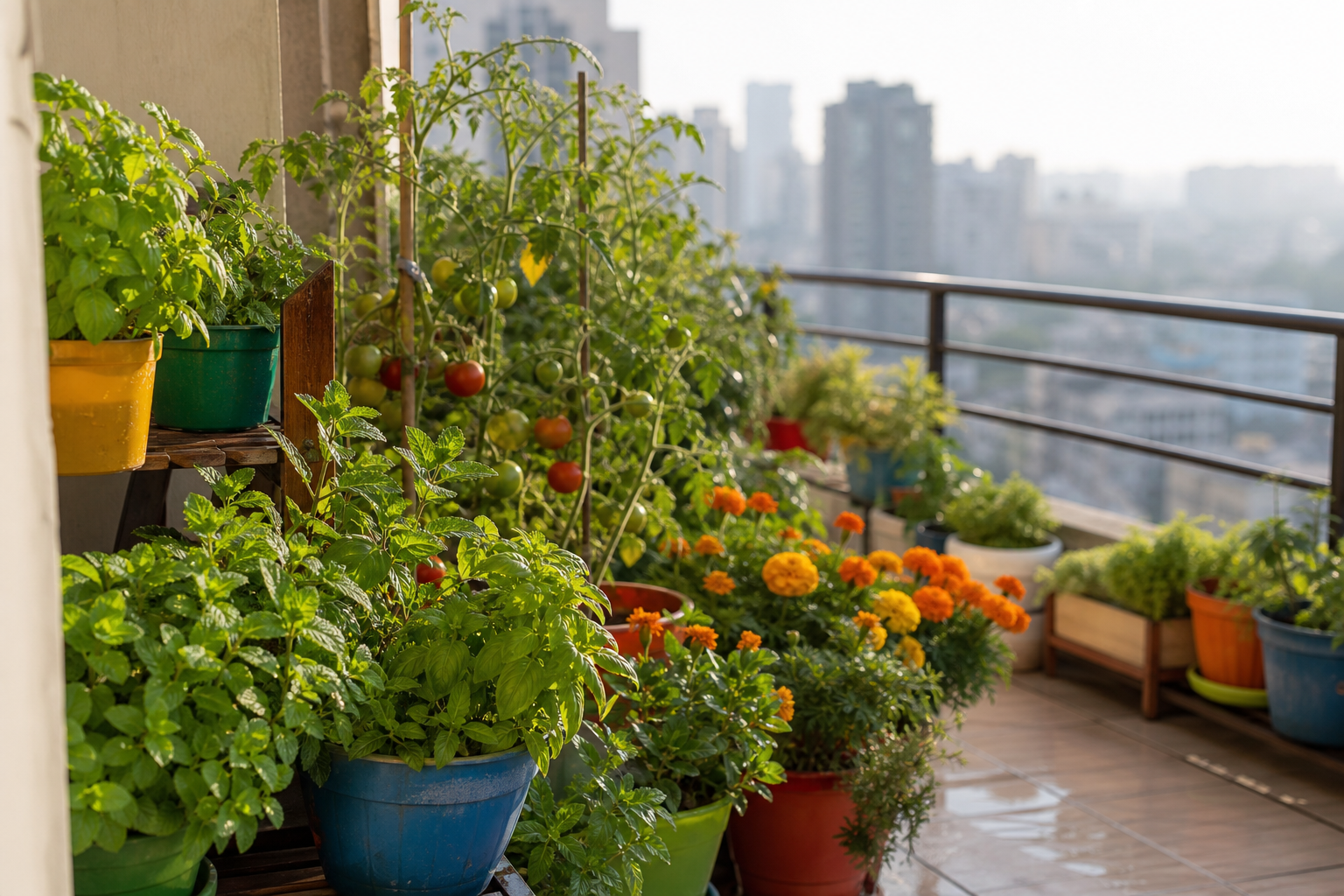
Your Balcony Is a Micro-Climate
A west-facing terrace in Hyderabad behaves nothing like an east-facing balcony in Pune. Before buying plants, watch your space for one week: how many hours of direct sun, when afternoon heat peaks, where water pools during monsoon, and whether wind whips through.
Most Indian city gardeners fail by copying a ground-floor tutorial that ignores heat reflection off glass, limited root space, and society rules about dripping water on neighbours below.
Check Weight and Drainage First
Wet soil is heavy. A single 12-inch terracotta pot can exceed 15 kg when soaked. Spread weight along walls and beams, not piled in one corner. If your building society has terrace guidelines, read them — some restrict total load or require drip trays.
Every container needs drainage holes. No holes, no garden — root rot kills more balcony plants than heat. Use saucers or trays, empty them after rain so mosquitoes do not breed.
Pot Mix That Actually Works in Heat
Bagged red soil alone compacts and cracks. A practical mix for most edibles and flowers:
- 40% garden soil or cocopeat
- 30% compost (vermicompost or well-rotted manure)
- 30% sand or perlite for drainage
Refresh the top third each year. Container soil exhausts faster than ground beds.
What to Grow by Season
Summer (March–June)
- Tomatoes, chillies, brinjal — Need 6+ hours sun; mulch pots to keep roots cool
- Curry leaf (kadi patta) — Slow to start but essential; protect from cold in north India
- Tulsi (holy basil) — Full sun, regular pinching for bushy growth
- Marigold and zinnia — Cheerful, handle heat once established
Monsoon (July–September)
- Spinach, fenugreek (methi), coriander — Sow in partial shade; coriander bolts fast in heat but monsoon sowings often succeed
- Reduce watering when clouds roll in — overwatering during rain weeks is the main killer
- Stake tall plants; gusts knock over top-heavy pots
Winter (October–February, north and central India)
- Carrots, radish, peas, lettuce — Delhi and Jaipur balconies can produce serious harvests in cool months
- Move frost-sensitive pots (portulaca, some hibiscus) to warmer walls overnight
Coastal cities like Chennai and Kochi skip true winter — adjust sowing dates using local nursery calendars, not generic online charts written for Europe.
Watering in Indian Heat
Morning watering beats evening when humidity is high — fungal issues on leaves increase if plants sit wet overnight in monsoon season.
Finger test: Insert a finger 2 cm into soil. Dry? Water deeply until it runs from drainage holes. Slightly damp? Wait.
Self-watering planters help if you travel for work. Drip irrigation with a timer is worth the setup on a large terrace.
Pests Without Panic
Aphids, mealybugs, and caterpillars show up. Start with:
- Neem oil spray (early morning, not in peak sun)
- Hand-picking on small setups
- Yellow sticky traps for flying pests
Avoid spraying harsh chemicals on edibles — you are eating this harvest.
Herbs That Forgive Beginners
Mint (contain it — separate pot or it takes over), lemongrass, ajwain (carom), and garlic chives survive inconsistent care better than fussy ornamentals. Success builds confidence.
Make Peace With Failure
One scorching May week can crisp lettuce. Monsoon fungus hits roses. Note what died and why — shade cloth in April might cost less than replacing six dead pots in June.
Balcony gardening in Indian cities is not a hobby for perfect conditions. It is a conversation with sun, rain, and the auntie upstairs who complains about dripping water. Get the basics right and the harvest — and the peace — is worth the learning curve.