How to Build a Raised Garden Bed in One Weekend
Build a 4×8 cedar raised bed in a single weekend—materials list, assembly steps, and the soil mix that keeps vegetables happy all season.
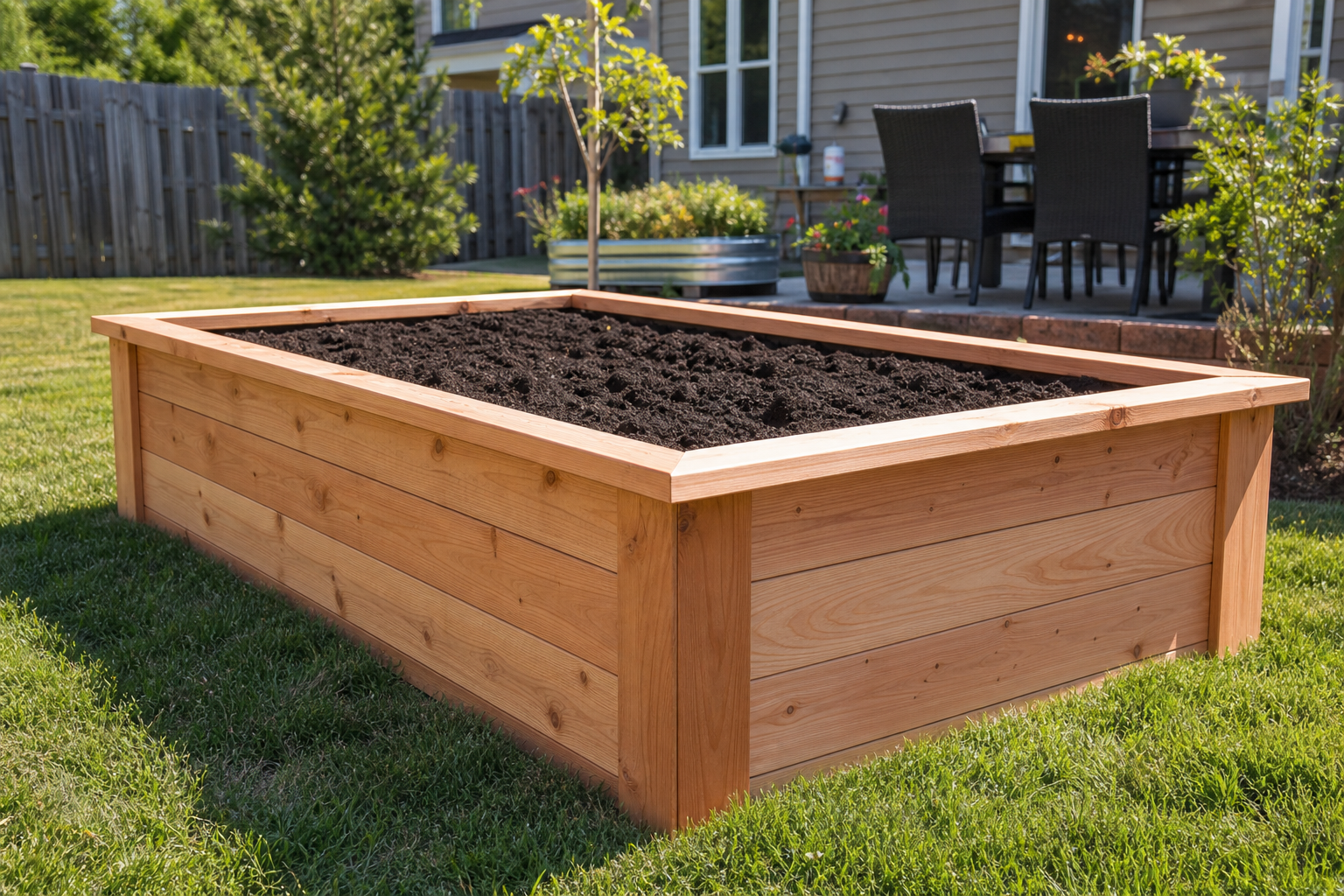
What You'll Need
For one 4×8 foot bed, 12 inches deep:
- 3 boards: 2×12×8 ft cedar (rot-resistant, untreated)
- 3 boards: 2×12×4 ft cedar
- 12 galvanized corner brackets with 1¼" exterior screws
- Landscape fabric (optional weed barrier)
- About 16 cubic feet of soil mix
Budget: $120–$180 depending on cedar prices near you. Lumber costs swing wildly—check before you promise your spouse a fixed number.
Step 1: Pick the Right Spot
Vegetables want six or more hours of direct sun. Morning sun is gentler on leafy greens; afternoon sun suits tomatoes and peppers.
Stay away from overhanging trees—roots steal nutrients and shade the bed. And avoid planting near black walnut trees. They release juglone, a compound that's toxic to tomatoes, peppers, and many other vegetables.
Step 2: Level the Ground
Strip the grass and level the surface. You don't need to excavate deeply. The bed just needs to sit flat so soil doesn't wash out one side after the first heavy rain.
Step 3: Build the Frame
Cut one 8-foot board in half for the end pieces. Attach corners with brackets. Pre-drill screw holes—cedar splits easily if you drive screws straight in, especially near board ends.
This goes faster with two people: one holds, one drills. Solo builders can use clamps to hold corners square.
Step 4: Fill With Soil That Drains
Mel Bartholomew's "Mel's Mix" still works well: one-third compost, one-third peat moss or coco coir, one-third vermiculite. It drains freely, resists compaction, and gives seedlings an easy start.
If you're filling multiple beds, buying bulk compost from a landscape supplier beats bagged soil on price.
Step 5: Plant and Mulch
You can plant the same day you fill the bed. Top-dress with about two inches of straw mulch around seedlings. It keeps moisture in and mud off lettuce leaves after rain.
Lessons From Building Dozens of These
- Cedar lasts 10–15 years untreated. Skip pressure-treated lumber for edible gardens—the chemicals aren't worth the risk.
- Run drip irrigation before you plant. Snaking tubing through a full bed of tomatoes is miserable.
- Gophers and moles? Line the bottom with hardware cloth before you add soil. One tunnel can wipe out an entire carrot crop overnight.