Getting Your Canadian Garden Ready for Winter
Canadian winters are no joke for plants — or for fences, pots, and tools left outside. This checklist covers what to do in fall so your garden survives months of freeze-thaw and heavy snow.
Winter Starts Earlier Than You Think
In Winnipeg, frost can land in September. Vancouver might not see a hard freeze until December. "Canadian gardening" is really regional gardening with extra snow — what works in Halifax will kill a fig tree in Calgary.
The goal of fall prep is not to fight winter. It is to protect roots, reduce freeze-thaw damage, and make spring less overwhelming when the snow finally melts in April (or May, if you are unlucky).
Know Your Plant Hardiness Zone
Agriculture Canada publishes hardiness zones from 0 (coldest) through 9. Match plants to your zone, not to a pretty label at the garden centre:
- Zones 2–4 (Prairies, northern Ontario, much of Quebec) — Focus on native and ultra-hardy species; container gardens need indoor shelter
- Zones 5–6 (Southern Ontario, parts of BC interior) — Wide plant palette; still mulch tender perennials
- Zones 7–9 (Lower mainland BC, parts of Vancouver Island) — Milder winters but wet; watch root rot on heavy soil
When in doubt, ask at a local nursery that sources stock for your province — not a big-box store shipping from three zones south.
Trees and Shrubs: Wrap, Mulch, Wait
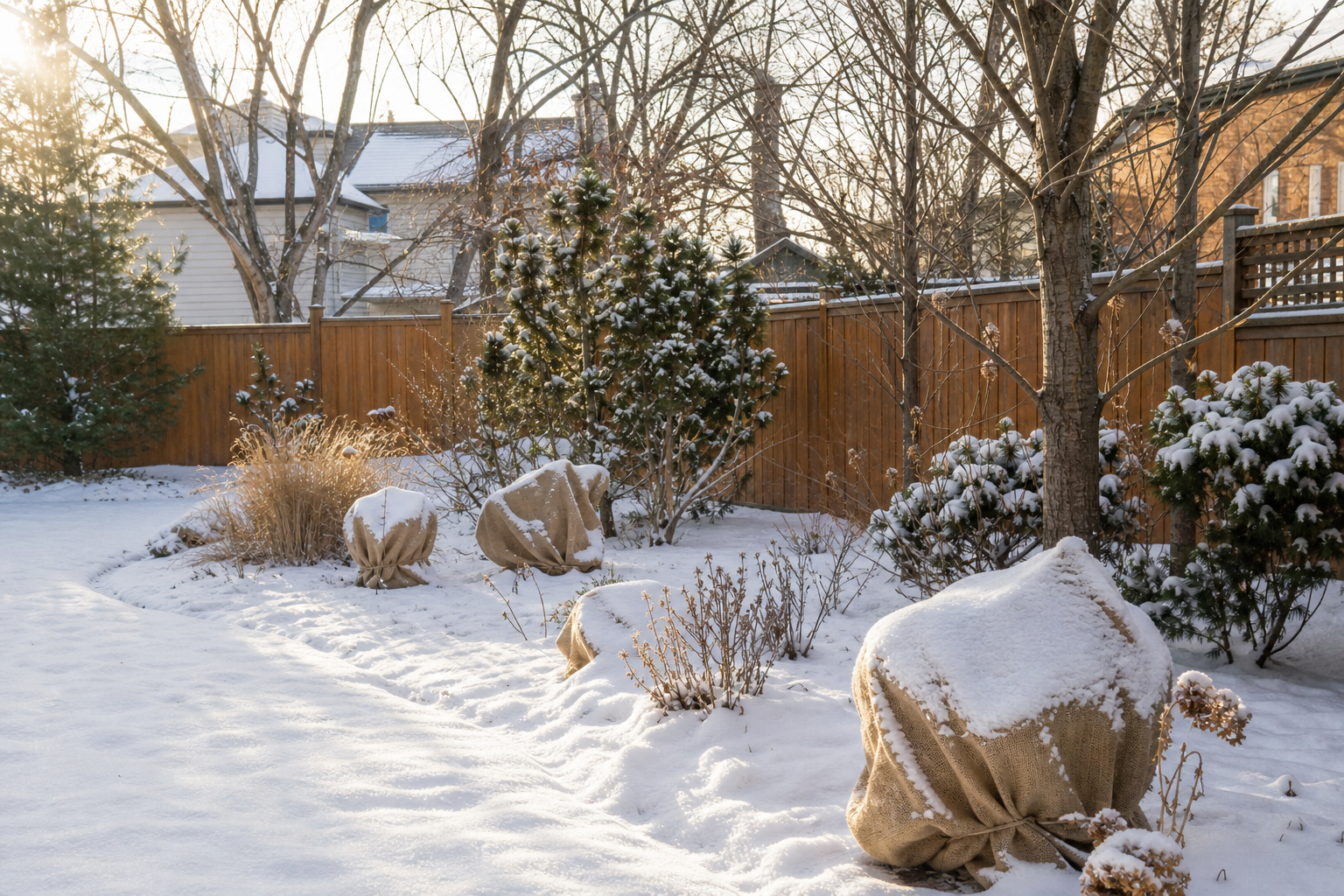
Young trees with thin bark — maples, fruit trees, ornamental cherries — benefit from spiral tree guards or burlap wraps against sunscald and rodent chewing. Remove wraps in spring before growth starts.
Apply 5–8 cm of shredded bark mulch around perennials and shrubs after the ground begins to cool, not while soil is still warm in early September. Mulch too early keeps roots from hardening off.
Water deeply before freeze-up if autumn has been dry. Desiccated evergreens brown out over winter even when soil is frozen.
Perennials and Bulbs
- Cut back diseased foliage; leave healthy seed heads for birds if you like winter structure
- Divide overcrowded hostas and daylilies — they establish better with weeks of cool soil ahead
- Plant spring bulbs (tulips, daffodils, crocus) until the ground freezes solid
- Mark bulb locations with stakes — spring snow hides where you planted
In Quebec and the Maritimes, heavy snow actually insulates crowns. In Alberta, chinook winds melt snow, expose plants, then refreeze — extra mulch helps there.
Containers and Raised Beds
Terracotta and ceramic pots crack when soil inside freezes and expands. Empty them, scrub, and store upside down in a shed or garage.
Raised beds cool faster than in-ground plots. A thick straw mulch over empty beds prevents soil compaction from repeated freeze-thaw cycles. Come spring, rake it aside and compost it.
Lawn Care Before the First Hard Frost
Give the lawn a final mow slightly shorter than summer height — about 5–6 cm — to reduce matting under snow. Aerate if compaction is bad. Fall is the best time to overseed thin patches in southern Canada; seeds germinate in cool, damp autumn soil.
Skip late nitrogen in cold zones. You want roots to slow, not push tender top growth into frost.
Tools, Hoses, and Furniture
Drain garden hoses and shut off outdoor taps from inside the house if you have a separate valve. Frozen pipes are expensive; a drained hose is free insurance.
Clean, oil, and hang tools. Sharpen mower blades now so you are not fighting rusted bolts in April.
Store cushions; cover or move furniture that cannot handle ice load. A collapsed Adirondack chair in March is a sad sight.
Spring Starts in Fall
Write down what died, what thrived, and where water pooled. That notebook beats memory when you are standing in a nursery in May with a cart full of optimism.
Canadian gardening rewards patience and local knowledge. Your neighbour three provinces over is not wrong — their winter just is not yours.